
Okara

Food guide

How to Compare Okara Protein Content

Okara protein content depends on whether you are looking at moist soybean pulp, dried powder, or a prepared food. Start with the product's weight and label before comparing figures.

Okara landing-page visual

Prerequisites

Gather the details that make a protein figure meaningful before comparing products or recipes.

Okara feature visual representing the starting ingredient

1

Identify the form

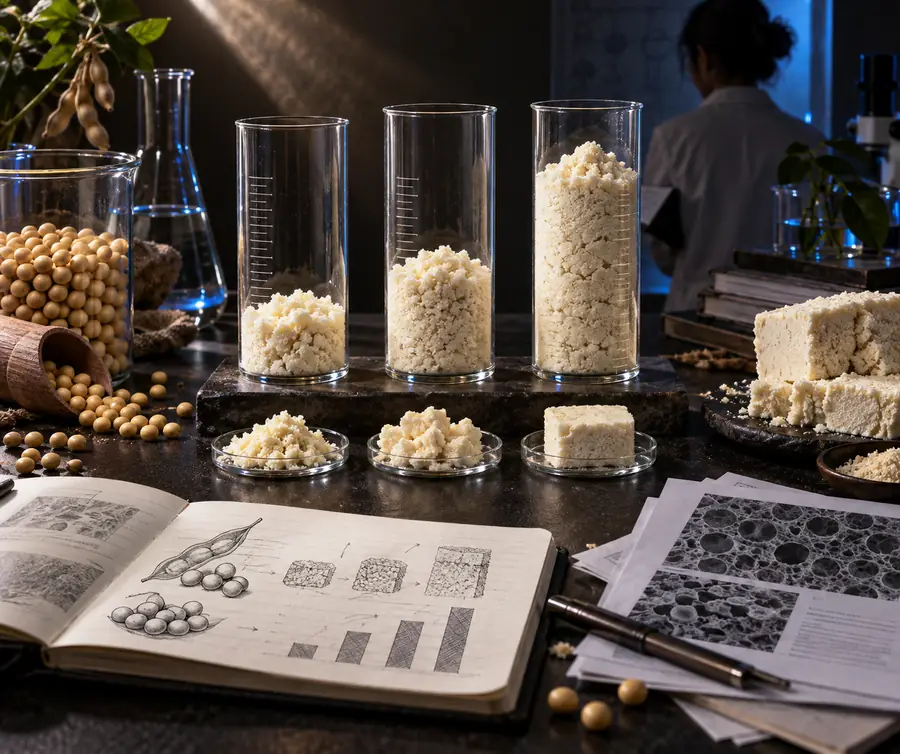
Fresh okara retains water after soy milk is made. Drying removes much of that water, so protein makes up a larger share of the powder's weight even though drying does not create protein. A fresh-pulp figure and a powder figure are not directly interchangeable.

  • Note whether the figure describes fresh pulp or dried powder.
  • Check whether a recipe adds other protein-containing ingredients.

Okara feature visual accompanying a label-reading comparison

2

Find the measurement basis

Look for grams of protein per 100 grams and the product's stated serving size. Those are different ways to present the same label information. Keep the basis consistent when comparing two products, and use the package label when a particular brand matters.

  • Record both the serving weight and protein per serving.
  • Treat a generic food database entry as an estimate, not a product guarantee.

One full run-through

Follow the same checks for a recipe, a packaged ingredient, or a nutrition entry.

  1. 1

    Name the ingredient

    Write down whether your okara is fresh, dried, or part of a finished dish. If it is homemade, note how much liquid was pressed out; that affects its weight.

  2. 2

    Choose one basis

    Use the label's protein-per-100-gram figure to compare ingredients. For the amount you will eat, use the labeled serving or scale the figure to your measured portion.

  3. 3

    Check the result

    If the number looks unusually high, check for dried-weight reporting or added ingredients. For a prepared dish, calculate from every ingredient rather than assigning all its protein to okara.

Choosing by use case

The useful comparison changes with what you are making or trying to understand.

Home soy-milk maker

You have damp pulp left after straining soy milk.

For ideas that use the ingredient as it is, okara recipes describes ways to work with the moist pulp.

okara recipes

Powder shopper

You are comparing a dry ingredient with fresh pulp.

Okara powder explains why its lower moisture changes the weight-based comparison.

okara powder

Label reader

You want to put protein alongside the rest of the food label.

Okara nutrition provides the broader context for reading the ingredient's nutrient profile.

okara nutrition

Terminology checker

You have encountered different uses of the word okara.

What is okara identifies the soybean ingredient before you compare its food data.

what is okara

Options table

Select the form you have; each calls for a different reading of the number.

Use the weight you will eat

Fresh okara includes substantial moisture. Read a fresh-pulp entry on its own terms rather than applying a powder figure to a wet portion. Homemade pulp can differ in moisture depending on straining and pressing.

  • Best reference: a label for the fresh product, if available.
  • Main uncertainty: how much water remains.

Compare dry products on the same basis

Okara protein content expressed per 100 grams of powder will generally look higher than a fresh-pulp figure because the powder contains less water. Check the label for added ingredients and the amount of powder used in a serving.

  • Best reference: the powder's own nutrition label.
  • Main uncertainty: formulation and remaining moisture.

Count the whole recipe

A biscuit, patty, or loaf containing okara is a mixed food. Its protein depends on all the ingredients and the number of portions. Use the finished product's label, or total the recipe ingredients before dividing into servings.

  • Best reference: a finished-product label or full recipe.
  • Main uncertainty: portion size and other ingredients.

What fails

A visual comparison can remind you which form you have, but it cannot establish a nutrition value.

  • Unspecified form
  • Form identified

Do not infer protein grams from appearance or transfer a dry-weight figure to fresh pulp. These images illustrate the distinction; a label or measured recipe supplies the numbers.

Illustration used as a reference for comparing okara protein figures
Illustration associated with the dried okara powder guide

Make the comparison useful

Start with the form, then the label

Whether your okara is fresh, powdered, or baked into a dish, a meaningful protein estimate begins with the amount you actually use. Keep the measurement basis visible when sharing or comparing results.

Explore Okara
  • Identify the ingredient's form
  • Compare figures on the same weight basis
  • Use product-specific labels when available

FAQ

Yes. Okara is soybean pulp and retains some protein after soy milk is strained. The amount in a portion varies with its moisture and how it was produced.

Drying removes water, making protein a larger proportion of the remaining weight. It does not add protein to the original batch of pulp. Compare fresh and dried figures only after accounting for their different moisture levels.

No. Moisture, processing, and added ingredients differ between products. For a specific food, its nutrition label is more relevant than a generic entry.

Start with a protein figure that matches the form and weight of okara you used. Add the protein from the other ingredients, then divide the total by the number of servings. Treat the result as an estimate if the pulp's moisture or ingredient data is uncertain.

Start free
Start free